
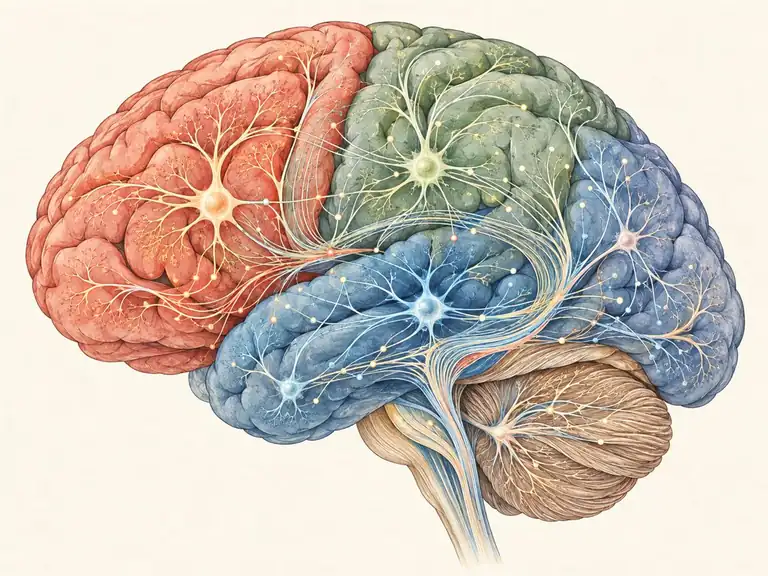
The brain is not a single ‘thinking muscle’. It is a three-pound organ made of specialised regions and connected cells that co-operate to interpret senses, guide movement, regulate the body and create thought.
Connected specialists
The cerebrum supports perception, voluntary action and complex thought. The cerebellum helps fine-tune movement and balance. The brainstem connects the brain with the spinal cord and helps regulate vital functions such as breathing and heart rate.
Billions of neurons communicate at junctions called synapses using electrical impulses and chemical messengers. Other brain cells support, nourish and protect this activity.
The brain builds experience
The brain does not passively record the world like a camera. It combines incoming information with attention, expectations and previous knowledge. This makes perception fast and useful, but it also means memory and perception can be mistaken.
Learning changes connections and patterns of activity—a capacity called plasticity. Plasticity continues throughout life, though the kinds and speed of change vary.
Test selective attention
- Look around for every circular object you can see.
- Close your eyes and list blue objects from the same scene.
- Notice how the first task shaped what entered memory.