
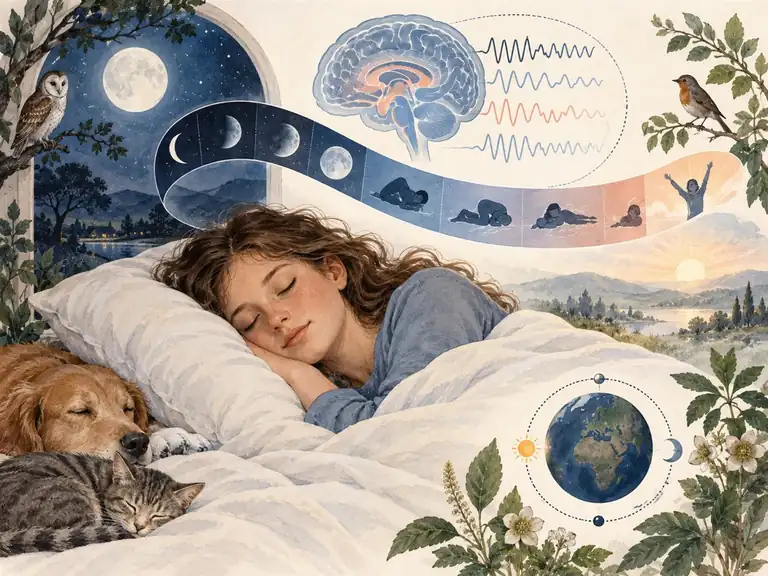
Sleep is a repeating biological state that supports brain function and physical health. The brain cycles through non-REM and REM stages rather than simply switching off.
A night has architecture
In non-REM sleep, brain activity and body processes change through progressively deeper stages. REM sleep brings rapid eye movements, active dreaming and a temporary reduction in most skeletal muscle activity. A sleeper normally cycles through these states several times.
Timing is influenced by the circadian clock and by sleep pressure that builds while we are awake. Light, routine, age and individual biology all affect the pattern.
Sleep supports waking life
Sleep helps attention, learning and memory. It also supports immune, metabolic and cardiovascular health. Missing sleep is not fully cancelled by simply ‘trying harder’ the next day.
Exact sleep needs vary with age and person. Persistent sleep difficulty, very loud snoring with pauses, or extreme daytime sleepiness deserves discussion with a responsible adult or health professional.
Map a sleep-friendly signal
- List the last three things you usually do before bed.
- Circle which ones signal darkness, quiet or routine.
- Choose one realistic cue to keep consistent for a week.