
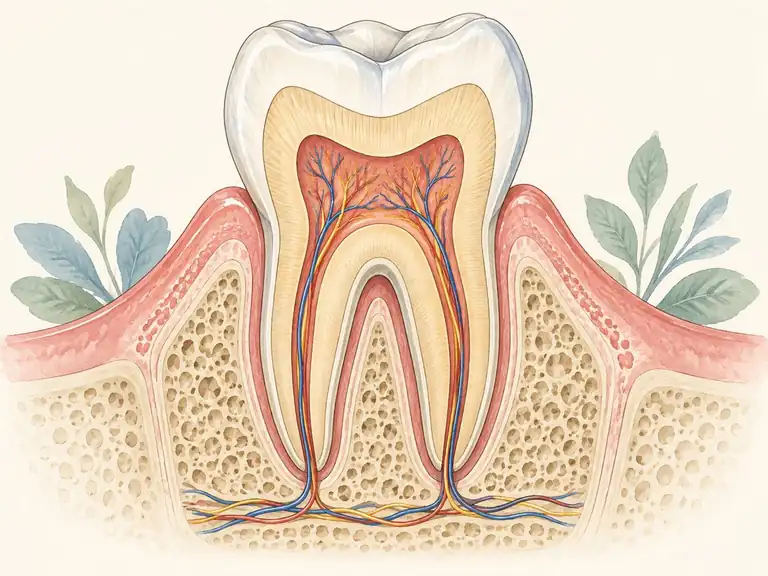
Teeth cut and grind food, support speech and help maintain facial structure. Enamel protects the crown, dentine forms most of the tooth and the pulp contains nerves and blood vessels.
Hard does not mean invulnerable
Enamel is the hardest tissue in the body but it is not living tissue that can regrow a lost section. Dentine beneath is less mineralised and can transmit sensations through microscopic tubules.
Incisors cut, canines grip and premolars and molars crush or grind. Adult dentitions usually include up to 32 teeth if all four wisdom teeth develop and remain.
How decay starts
Dental plaque is a community of microbes in a sticky film. When some microbes use sugars, they produce acids that remove minerals from enamel. Saliva can help neutralise acid and return minerals, but frequent acid attacks can tip the balance toward a cavity.
Fluoride, effective brushing, cleaning between teeth and limiting frequent sugary exposures help protect teeth. Individual advice belongs with a dental professional.
Model an acid-attack timeline
- Draw a day as a horizontal line.
- Mark every sugary drink or snack as a separate exposure.
- Compare frequent sipping with having the same item once alongside a meal.