
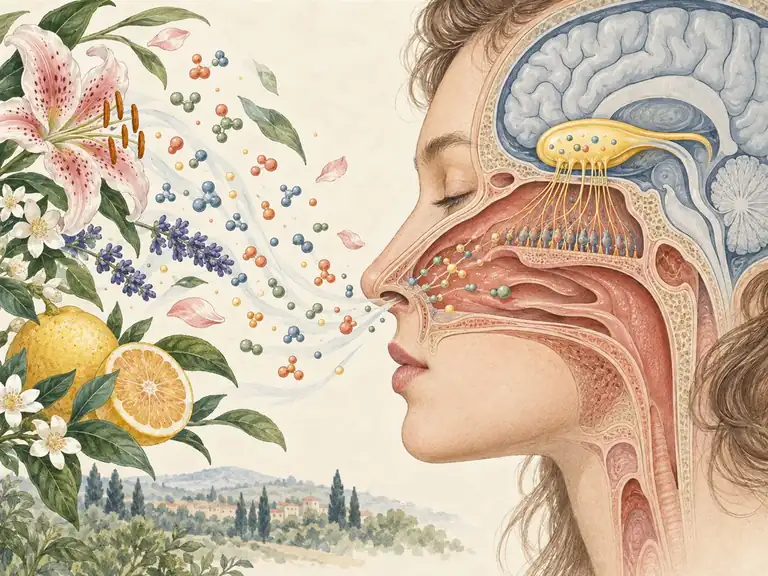
Smell begins when airborne molecules reach olfactory sensory neurons high inside the nose. Receptor patterns are sent to the brain, which identifies an odour from the combined signal.
A pattern code
Humans have many receptor types, and one odour molecule may activate several. The brain reads the pattern across receptors rather than assigning one receptor to every possible smell.
Sniffing moves air towards the olfactory region. During eating, molecules also travel from the mouth to the nose, making smell central to flavour.
Fast adaptation, strong associations
A constant odour often seems to fade because sensory systems adapt. A new smell or a change may become noticeable again.
Olfactory pathways connect with brain regions involved in emotion and memory, which helps explain why an odour can bring back a vivid association. A sudden unexplained loss of smell can have many causes and should be discussed with a health professional.
Create an odour vocabulary
- Choose three safe familiar items with an adult.
- Smell without looking and describe each without naming it.
- Compare words for intensity, freshness, sweetness or earthiness.