
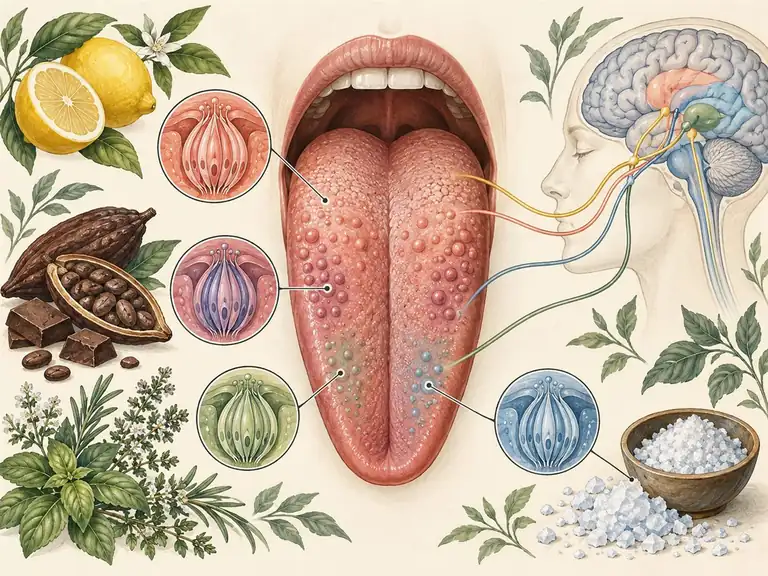
Taste cells detect at least five basic qualities—sweet, sour, salty, bitter and umami. What we call flavour also depends strongly on smell, temperature, texture and irritation-sensitive nerves.
No tongue map
Taste cells sit in taste buds across the tongue and elsewhere in the mouth and throat. Different taste qualities are not confined to separate large zones, so the familiar labelled ‘tongue map’ is misleading.
When food chemicals activate receptors, several cranial nerves carry signals toward the brain. The experience is combined with smell and touch information.
Flavour reaches the nose from behind
Chewing releases volatile molecules that travel from the mouth to the nasal cavity through a rear passage. A blocked nose reduces this retronasal smell, making food seem less flavourful even when basic taste remains.
Chilli heat and mint cooling are not basic tastes. They activate the common chemical sense, involving nerve endings that detect irritation and temperature-like effects.
Separate taste from aroma
- With permission, compare a small safe food while pinching and then releasing your nose.
- Name the basic taste first.
- Notice which flavour details arrive when smell returns.