
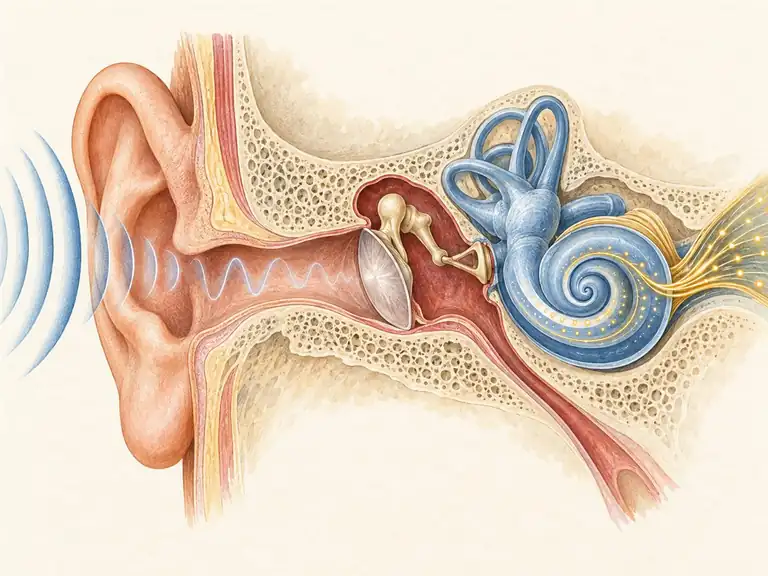
Hearing begins when sound waves vibrate the eardrum. Middle-ear bones transfer the vibration to fluid in the cochlea, where sensory hair cells create electrical signals for the brain.
The journey of a sound
The outer ear funnels sound down the ear canal. The eardrum moves three tiny bones—the malleus, incus and stapes—which pass vibration into the fluid-filled inner ear.
A travelling wave moves along the basilar membrane inside the cochlea. Different regions respond best to different frequencies, bending hair-cell projections and triggering nerve signals.
Hearing also needs the brain
The auditory nerve sends coded signals onward, but recognising speech or music depends on brain processing, attention and experience. Direction is estimated partly from tiny timing and level differences between the ears.
Inner-ear hair cells in humans do not readily regrow after damage. Lowering volume and limiting time around loud sound protects a resource that cannot simply be replaced.
Compare sound direction
- Have a partner make a quiet sound from different safe positions.
- Keep your eyes closed and point to the source.
- Discuss what changes when one ear is gently covered—without placing anything inside it.