
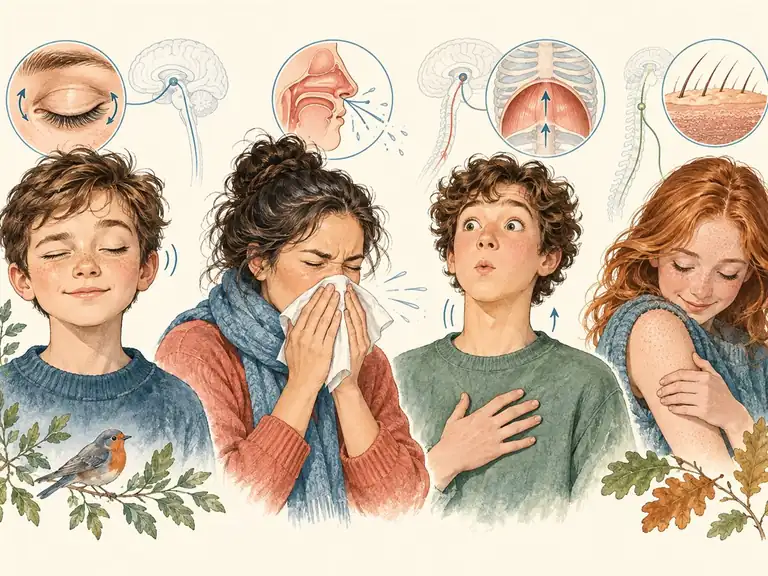
Many ‘weird’ body behaviours are protective reflexes or side-effects of systems working automatically. They feel surprising because the brain does not consciously direct each step.
Automatic, not accidental
Blinking spreads tears and protects the eye. Sneezing ejects irritants from the nose. Goosebumps are produced when tiny muscles attached to hair follicles contract. Hiccups combine a sudden diaphragm contraction with quick closure of the vocal folds.
Stomach noises are usually movements of gas and liquid as muscles push material through the digestive tract. None of these needs a conscious instruction; nerves and local control systems co-ordinate them.
Old features, present-day bodies
Some reactions are more obvious in fur-covered mammals. Raised hairs can trap insulating air or make an animal look larger, while on human skin the same response mostly appears as bumps. An inherited mechanism can remain even when its original effect is reduced.
A strange sensation is not automatically a problem. Context matters: a brief tingle after leaning on an arm is different from unexplained or persistent numbness, which needs adult or medical attention.
Sort the response
- Make two headings: protective and movement-related.
- Place blink, sneeze, hiccup, goosebumps and stomach rumble where you think they fit.
- Allow an item in both columns if you can justify it.