
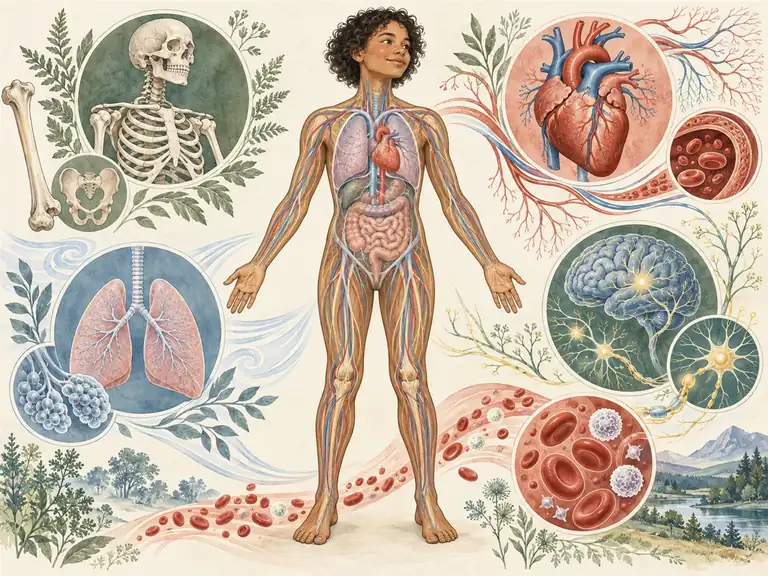
The body can be counted, but the answer often depends on age, body size and exactly what is being measured. Good body numbers are estimates with a definition, not magic constants.
A changing set of numbers
An adult skeleton is usually described as having 206 bones, while babies begin with more because several bones fuse as they grow. The body also contains hundreds of skeletal muscles, a branching network of blood vessels and trillions of cells. Scientists improve these estimates as measuring methods change.
Some familiar figures describe a typical adult, not every person. Resting heart rate, lung volume and blood volume all vary. A useful fact names the population, unit and conditions instead of pretending everybody is identical.
Scale from tiny to enormous
A single red blood cell is only a few micrometres across, yet enormous numbers circulate at once. At the other end of the scale, the skin covers the whole outside of the body and the nervous system links distant regions in fractions of a second.
Numbers help us compare systems: breathing moves gases, the heart moves blood, and bones provide a living framework. They do not rank one system as more important; each depends on the others.
Build an honest fact label
- Choose one body number.
- Write the unit and who it describes.
- Add one reason the number might vary.