
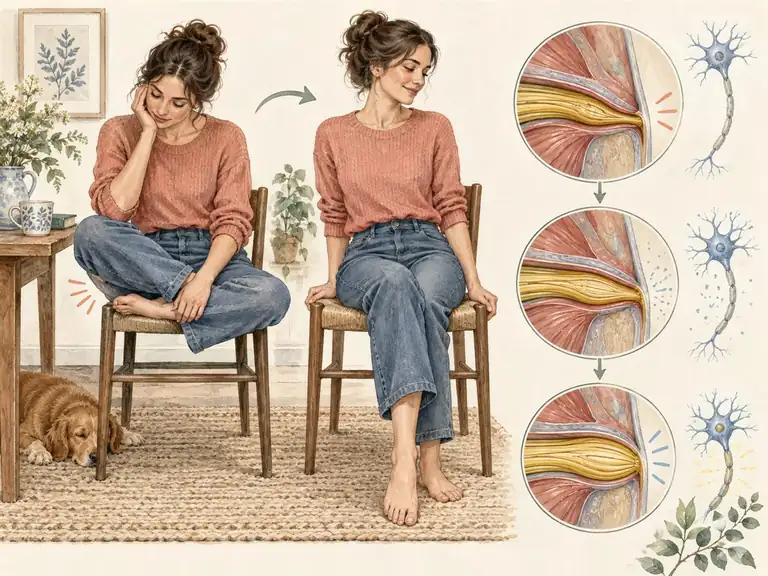
Pins and needles, or paraesthesia, often follows pressure on a nerve or its blood supply. When pressure is released, changing nerve signals are felt as tingling while normal sensation returns.
Nerves need space and supply
Peripheral nerves carry electrical signals between the spinal cord and skin or muscles. Leaning or sitting in one position can compress a nerve and nearby small blood vessels, interrupting normal patterns.
As compression ends, different nerve fibres recover at different rates. The mixed, irregular signals can be interpreted as prickling, buzzing or mild burning before normal feeling returns.
Brief is different from persistent
A short episode that clearly follows an awkward position usually resolves after moving. Repeated, unexplained, one-sided or lasting tingling—especially with weakness, severe pain or other neurological signs—needs medical assessment.
Shaking a limb violently is unnecessary. Change position gently and allow circulation and signalling to recover.
Map a safe explanation
- Draw a cable beside a small blood vessel.
- Show gentle pressure narrowing the space.
- Remove the pressure and label the returning, temporarily irregular signals.