
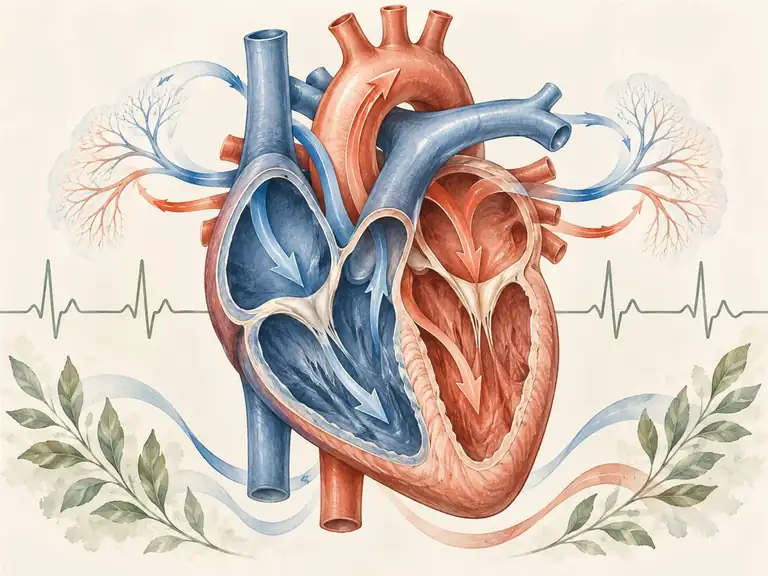
The heart is a muscular pump at the centre of the circulatory system. Its right side sends oxygen-poor blood to the lungs; its left side sends oxygen-rich blood around the body.
A double circuit
Blood returning from the body enters the right atrium, passes to the right ventricle and travels to the lungs. Oxygenated blood returns to the left atrium, moves into the left ventricle and leaves through the aorta.
Four valves act as one-way doors. The familiar ‘lub-dub’ sounds mainly come from valves closing as chambers contract and relax.
Timing is electrical
Special pacemaker cells in the sinoatrial node begin an electrical signal. The signal spreads through the atria, pauses at the atrioventricular node and then travels through the ventricles so contractions happen in a useful order.
Pulse rate changes with activity, temperature, emotion and health. One reading is context, not a verdict; health questions belong with a qualified professional.
Follow one red blood cell
- Draw four heart chambers.
- Add lungs above and body below.
- Use arrows to trace body → right heart → lungs → left heart → body.