
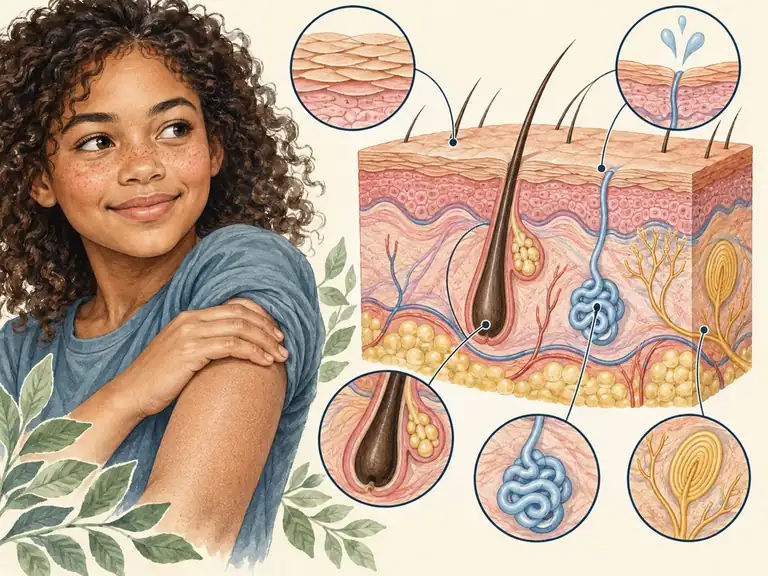
Skin is an organ made of layers that protect the body, limit water loss, sense the environment and help regulate temperature. It is active tissue, not wrapping.
Layers with different work
The epidermis is the outer layer and continually renews. Below it, the dermis contains connective tissue, blood vessels, nerves, hair follicles and glands. Subcutaneous tissue beneath the skin helps cushion and insulate.
Melanin helps protect cells from ultraviolet radiation and contributes to skin colour. Every skin tone can be damaged by UV exposure.
Signals and repair
Touch, pressure, temperature and pain are detected by different nerve endings and receptors. Blood vessels can widen or narrow, and sweat evaporation can remove heat.
After a wound, clotting, inflammation, tissue formation and remodelling overlap. A scar repairs the barrier but is not identical to the original tissue.
Map skin’s jobs
- Trace a hand on paper.
- Around it write barrier, sensation, temperature and repair.
- Add one real example of each job.