
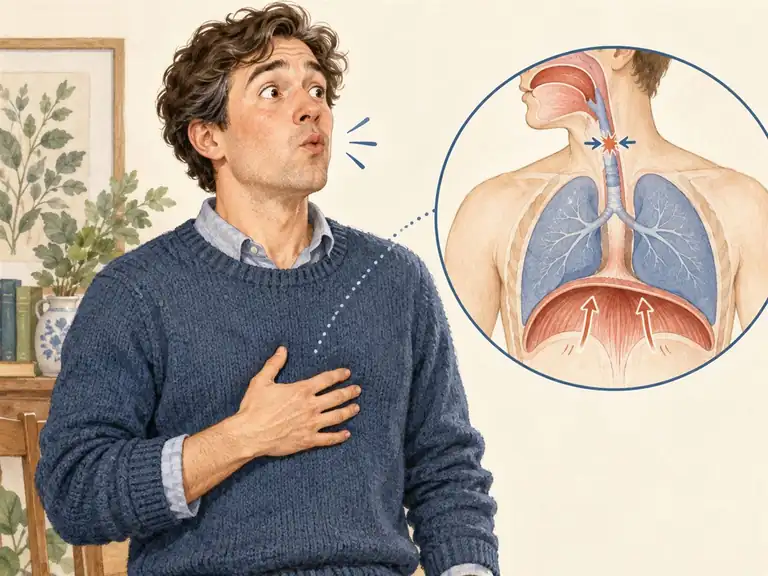
A hiccup happens when the diaphragm contracts involuntarily and the vocal folds close quickly, producing the ‘hic’ sound. The reflex can be triggered by irritation, a stretched stomach or excitement, but often has no clear cause.
Two movements make one hiccup
The diaphragm is the main muscle beneath the lungs. Its sudden contraction draws air in; rapid closure at the glottis interrupts the airflow and creates the sound.
Eating quickly, carbonated drinks, a large meal or sudden excitement can trigger short episodes. Most stop on their own within minutes.
Purpose is not settled
Researchers have proposed evolutionary and developmental explanations, but no single purpose is established. It is safer to describe the mechanism confidently and the ultimate reason as uncertain.
Home remedies have limited evidence. Hiccups lasting for days or repeatedly interfering with sleep or eating need medical advice because persistent hiccups can have an underlying cause.
Make a mechanism strip
- Draw diaphragm contraction.
- Add air moving in.
- Finish with the glottis closing and label where the sound is produced.