
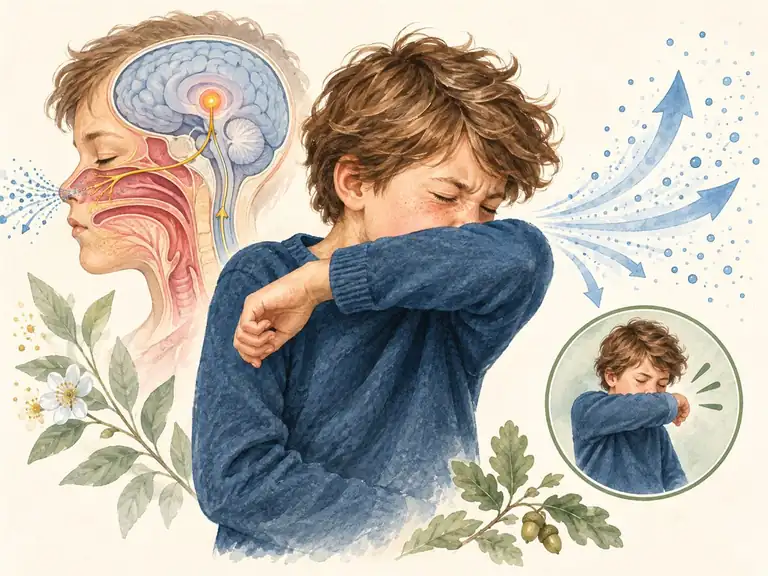
Sneezing is a co-ordinated reflex triggered when sensory nerves detect irritation in the nose. The brainstem organises a forceful burst of air through the nose and mouth.
From tickle to reflex
Irritants such as dust, pepper particles, infection-related inflammation or allergens can stimulate branches of the trigeminal nerve in the nasal lining. Signals reach a brainstem network that co-ordinates breathing and facial muscles.
A deep inhalation is followed by pressure and a rapid release of air. Mucus and droplets can carry particles away from the nose, though they can also spread infection—one reason to sneeze into a tissue or elbow.
Not always the same trigger
Some people sneeze in bright light, a trait called the photic sneeze reflex. Others may sneeze after eating or with temperature changes. These variations show that reflex pathways can be linked in different ways.
Suppressing a sneeze by tightly blocking both nose and mouth can create high pressure. Cover the droplets, not the airflow completely.
Trace the reflex arc
- Write stimulus → sensory nerve → brainstem → muscles → response.
- Place nasal irritant and sneeze at the correct ends.
- Explain why it happens before a conscious decision.